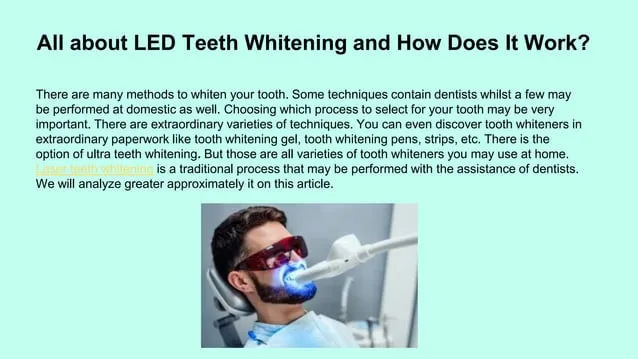
What Are Teeth Whitening Lights
Teeth whitening lights are specialized devices designed to enhance the effectiveness of teeth whitening treatments. They are often used in conjunction with bleaching agents, typically hydrogen peroxide or carbamide peroxide, to accelerate the whitening process. These lights emit specific wavelengths of light that interact with the whitening agent and the stained molecules within the tooth enamel. The goal is to break down the stains and discoloration, resulting in a brighter and more aesthetically pleasing smile. Teeth whitening lights are a popular option in cosmetic dentistry, offering a faster and more dramatic whitening effect compared to some at-home methods. Understanding how these lights work involves delving into the science of light interaction and the chemical processes involved in teeth whitening.
The Science Behind Teeth Whitening Lights
The science behind teeth whitening lights centers around photochemistry, the study of how light affects chemical reactions. In the context of teeth whitening, the light serves as a catalyst, speeding up the reaction between the bleaching agent and the stains on the teeth. The light energy excites the molecules of the bleaching agent, causing them to become more reactive and thus more effective at breaking down the stain molecules. Different types of lights, such as LED, laser, and UV, emit different wavelengths of light. The effectiveness of each light type depends on its specific wavelength and its ability to penetrate the tooth enamel and interact with the whitening agent.
How Whitening Agents Work

Whitening agents, such as hydrogen peroxide and carbamide peroxide, are the core components of teeth whitening treatments. These chemicals work by releasing oxygen molecules when they come into contact with the stained tooth enamel. The oxygen molecules then penetrate the enamel and break down the stain molecules, which are responsible for the discoloration. The effectiveness of these agents is enhanced when they are activated by light. The light energy accelerates the release of oxygen and the subsequent breakdown of stain molecules, leading to faster and more noticeable whitening results. The concentration of the whitening agent and the duration of exposure also play a role in the overall effectiveness.
The Role of the Light
The primary role of the light is to act as a catalyst, boosting the effectiveness of the whitening agent. The light energy, typically in the blue spectrum, is absorbed by the whitening agent, causing it to break down more quickly and release more oxygen molecules. This accelerated process leads to a faster and more intense whitening effect. The light also helps to penetrate the tooth enamel, ensuring that the whitening agent reaches the deeper layers of the tooth where stains may reside. Without the light, the whitening process would still occur, but it would take significantly longer to achieve the same results. The light ensures a quicker and more efficient whitening treatment.
Types of Teeth Whitening Lights
Several types of teeth whitening lights are available, each utilizing different technologies to enhance the whitening process. These lights vary in their light source, intensity, and the wavelengths of light they emit. The choice of light type often depends on the specific whitening system, the desired results, and the professional or at-home setting where the treatment is being performed. Each type of light offers unique advantages, contributing to the overall effectiveness and efficiency of the teeth whitening process.
LED Lights

LED (Light Emitting Diode) lights are a popular choice for teeth whitening due to their energy efficiency and effectiveness. They emit a specific wavelength of blue light that is ideal for activating the whitening agents. LED lights produce minimal heat, reducing the risk of tooth sensitivity during the treatment. They are often used in both professional dental offices and at-home whitening kits. The focused and controlled light emission ensures that the whitening agent is activated effectively, leading to noticeable results. LED lights are a cost-effective and safe option for enhancing the teeth whitening process.
Laser Lights
Laser lights are used in professional teeth whitening treatments to provide a more intense and targeted approach. Lasers emit a concentrated beam of light, which can quickly activate the whitening agent and accelerate the whitening process. The precision of laser lights allows dentists to control the light exposure and target specific areas of discoloration. Laser teeth whitening often provides faster results compared to other methods. It is typically performed in a dental office under professional supervision to ensure safety and effectiveness. Laser lights are a powerful option for achieving significant teeth whitening results.
UV Lights
UV (Ultraviolet) lights were once used in teeth whitening, but their use has become less common due to potential risks. UV light can generate heat and may increase the risk of tooth sensitivity and other adverse effects. While UV lights can effectively activate whitening agents, they are not as frequently used in modern teeth whitening practices due to safety concerns. LED and laser lights have largely replaced UV lights, offering a safer and more controlled approach to teeth whitening.
The Teeth Whitening Process

The teeth whitening process involves several steps, regardless of the type of light used. Understanding the process helps individuals prepare for and manage their expectations regarding the treatment. From pre-treatment preparation to post-treatment care, each step plays a vital role in achieving the desired whitening results while ensuring the safety and comfort of the patient. The following steps outline a typical teeth whitening procedure that utilizes light to enhance the process.
Pre-Treatment Preparation
Before the teeth whitening treatment, a dentist will assess the patient’s oral health and determine if they are a suitable candidate. This includes checking for cavities, gum disease, or other dental issues that need to be addressed before whitening. The teeth are then cleaned to remove any plaque or debris that could interfere with the whitening process. In some cases, a protective barrier is applied to the gums to prevent irritation from the whitening agent. These preparations ensure a safe and effective treatment.
Applying the Whitening Gel
The whitening gel, which contains the bleaching agent, is applied to the teeth. The dentist or dental professional will carefully apply the gel to the surface of the teeth, ensuring even coverage. The concentration of the whitening agent may vary depending on the treatment, with professional treatments typically using higher concentrations than at-home kits. The gel is formulated to adhere to the teeth, allowing the bleaching agent to interact with the stains in the enamel. The application of the gel is a crucial step in the teeth whitening process.
Activating the Light

Once the whitening gel is applied, the teeth whitening light is used to activate the bleaching agent. The light is positioned near the teeth, and the specific wavelength of light stimulates the chemical reaction, accelerating the whitening process. The duration of light exposure depends on the type of light, the whitening system, and the desired results. The light activation step is repeated multiple times, typically in sessions lasting for a few minutes each. During this time, the patient may experience some sensitivity or warmth.
Post-Treatment Care
After the teeth whitening treatment, patients receive post-treatment care instructions to maintain their results and minimize any potential side effects. These instructions often include avoiding certain foods and beverages that can stain the teeth, such as coffee, tea, and red wine. Patients may also be advised to use a toothpaste designed for sensitive teeth to reduce any discomfort. Regular dental check-ups and good oral hygiene practices are essential for prolonging the whitening effects and maintaining a healthy smile.
Benefits of Teeth Whitening Lights
Teeth whitening lights offer several benefits, making them a popular choice for individuals seeking a brighter smile. They provide a faster and more effective whitening process compared to some at-home methods. The enhanced results can boost self-confidence and improve overall appearance. Professional treatments using lights are often performed under the supervision of a dental professional, ensuring a safe and controlled procedure. The ability to achieve significant whitening results quickly is a major advantage of using teeth whitening lights. The advanced technology offers a convenient and reliable solution for those looking to enhance their smile.
Things to Consider

While teeth whitening lights offer several advantages, there are also some factors to consider. The effectiveness of the treatment can vary depending on the type and severity of the stains, as well as individual tooth enamel characteristics. Some people may experience temporary tooth sensitivity or gum irritation after the treatment. It is important to consult with a dentist to determine if teeth whitening lights are a suitable option and to discuss any potential risks or side effects. The cost of professional treatments may be higher than at-home alternatives.
Potential Side Effects
Potential side effects of teeth whitening lights can include tooth sensitivity, gum irritation, and, in rare cases, damage to the tooth enamel. Tooth sensitivity is often temporary and can be managed with toothpaste for sensitive teeth. Gum irritation can be minimized by using protective barriers during the treatment. While rare, excessive or improper use of whitening treatments can potentially damage tooth enamel. Consulting with a dentist is essential to minimize the risk of side effects and to ensure the treatment is safe and appropriate for the individual.
Professional vs. At-Home Options
Teeth whitening lights are available in both professional and at-home options, each with its own advantages. Professional treatments, performed in a dental office, often utilize stronger whitening agents and more powerful lights, providing faster and more dramatic results. At-home kits typically contain lower concentrations of bleaching agents and require more time to achieve the desired whitening effect. While at-home kits are more convenient and cost-effective, professional treatments offer the expertise of a dental professional, ensuring safety and optimal results. The choice between professional and at-home options depends on individual preferences, budget, and the desired level of whitening.
Conclusion

Teeth whitening lights represent a significant advancement in cosmetic dentistry, offering an efficient and effective way to brighten smiles. By understanding the science behind these lights, the different types available, and the overall whitening process, individuals can make informed decisions about their dental care. While providing significant benefits, it’s important to consider the potential side effects and to consult with a dental professional to determine the best course of treatment. Whether opting for a professional treatment or an at-home kit, teeth whitening lights offer a promising path to a more confident and radiant smile.