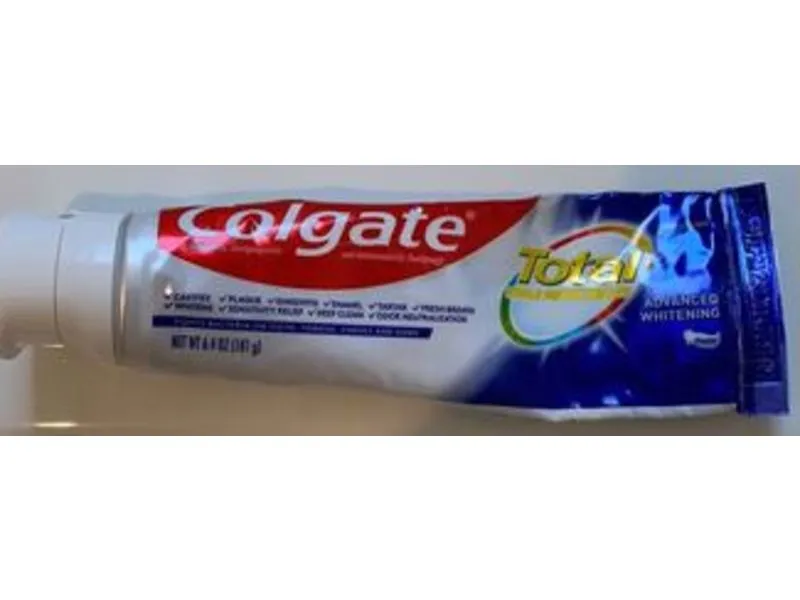
What is Colgate Total Whitening Toothpaste
Colgate Total Advanced Whitening toothpaste is a popular oral hygiene product designed to provide comprehensive care for your teeth and gums while also promoting a brighter, whiter smile. It is formulated with a variety of ingredients that work synergistically to fight against cavities, plaque, gingivitis, and bad breath. The advanced whitening aspect of the toothpaste focuses on removing surface stains, contributing to a noticeable improvement in the overall appearance of your teeth. Beyond cosmetic benefits, Colgate Total aims to support overall oral health through its multifaceted approach. The product is widely available and often recommended by dental professionals as part of a daily oral care routine. It is important to note that while Colgate Total Advanced Whitening can help remove surface stains, it does not change the intrinsic color of the teeth like professional whitening treatments do.
The Top 5 Ingredients in Colgate Total Whitening Toothpaste
Colgate Total Advanced Whitening toothpaste contains a blend of active and inactive ingredients. These ingredients are carefully chosen to work in synergy to provide the desired benefits. The key active ingredients are what set Colgate Total apart from other toothpastes. The following sections will delve into the top 5 ingredients found in Colgate Total Advanced Whitening toothpaste and the roles they play in maintaining oral health and enhancing the appearance of your teeth. Understanding these ingredients can help consumers make informed choices about their oral hygiene products and appreciate how each component contributes to a healthier smile. Each ingredient is included in amounts that are deemed safe and effective by dental health professionals.
Sodium Fluoride Benefits

Sodium fluoride is a crucial ingredient in Colgate Total Advanced Whitening toothpaste, and is primarily included for its cavity-fighting properties. It strengthens tooth enamel, making it more resistant to acid attacks from bacteria that cause tooth decay. Regular use of fluoride toothpaste is a highly recommended preventive measure by dentists globally. Fluoride works by remineralizing the enamel, essentially repairing microscopic areas where the enamel may have begun to erode. It helps to create a protective barrier against the sugars and acids that can lead to cavities. Furthermore, fluoride has the potential to slow down the progression of early decay, and in some cases, reverse the damage caused by the acidic environment. The benefits are particularly important for individuals at higher risk for developing cavities, such as those with a history of tooth decay or those who consume a lot of sugary foods and drinks. Using a toothpaste containing fluoride in your daily routine is an easy way to support your overall oral health.
How Sodium Fluoride Works
Sodium fluoride works at a molecular level to protect and strengthen teeth. When fluoride comes into contact with tooth enamel, it replaces some of the calcium and phosphate ions, forming fluorapatite, which is more resistant to acid dissolution than the original tooth enamel. This process helps to harden the enamel and makes it less susceptible to the demineralization that leads to cavities. Fluoride also interferes with the metabolic processes of bacteria present in the mouth. By inhibiting their ability to produce acid, it reduces the risk of tooth decay. Moreover, fluoride can enhance the remineralization process when it is present in saliva. It helps to deposit minerals back into the weakened enamel, thus reversing early stages of decay. This is the reason dentists often recommend using fluoride toothpaste and getting professional fluoride treatments, particularly for children and those with an increased risk of dental issues. The cumulative effect of these processes makes fluoride a critical component of any effective oral health strategy, contributing significantly to the prevention of cavities and the maintenance of healthy teeth.
Zinc Phosphate’s Role
Zinc phosphate is included in Colgate Total Advanced Whitening toothpaste for its role in tartar control and its ability to help remove stains. Tartar is a hardened form of plaque that can form on teeth, and its presence can promote inflammation and gum disease. By including zinc phosphate, the toothpaste helps to prevent the formation of tartar by interfering with the mineralization process of plaque. Zinc phosphate also assists with the removal of surface stains from your teeth, contributing to the whitening effect of the toothpaste. In addition to its tartar control and stain removal properties, zinc phosphate can provide a mild antibacterial action, which can help to reduce the levels of bacteria in the mouth and promote better oral hygiene. This combination of functions makes zinc phosphate a valuable ingredient in the Colgate Total Advanced Whitening toothpaste, providing more than just cosmetic benefits by supporting overall dental health through comprehensive care.
The Importance of Zinc Phosphate

The inclusion of zinc phosphate is particularly important because it addresses issues beyond those that can be solved by fluoride alone. While fluoride focuses on strengthening the enamel and preventing cavities, zinc phosphate tackles tartar buildup, which can lead to gum disease, and stain removal. The formation of tartar can lead to aesthetic issues like yellowing, it also provides a rough surface to which plaque easily adheres, exacerbating the risk of tooth decay and gingivitis. The action of zinc phosphate reduces the need for more aggressive treatments and interventions from dentists. Using a toothpaste that includes zinc phosphate as part of your regular dental routine helps to maintain a clean, healthy mouth. This proactive approach can significantly reduce the need for professional dental cleanings and improve the chances of maintaining healthy teeth and gums for the long term. The multifaceted approach ensures better oral health.
What is Hydrated Silica
Hydrated silica is a mild abrasive that is a key ingredient in many whitening toothpastes, including Colgate Total Advanced Whitening. It is used to gently scrub the surface of the teeth, removing stains and plaque. The structure of hydrated silica is engineered to effectively clean the teeth without damaging the enamel. It is a common ingredient that provides the cleaning action necessary to keep your teeth feeling smooth and looking clean. The choice of hydrated silica is very important, as the abrasiveness must be optimized to effectively remove surface stains while not harming the underlying enamel. The properties of hydrated silica contribute to the overall efficacy of the toothpaste, making it an essential component in the whitening process.
Hydrated Silica and Cleaning Power
The cleaning power of hydrated silica is derived from its ability to physically remove surface stains and plaque. When brushing, the small particles of hydrated silica act like tiny polishing agents, working to remove stains caused by coffee, tea, and other substances. Unlike some harsher abrasives, hydrated silica is formulated to be gentle enough to be used daily without wearing down tooth enamel. It is designed to provide effective cleaning to improve the appearance of your teeth. By removing surface stains, hydrated silica helps to restore the natural whiteness of your teeth, contributing to a brighter smile. Its use leads to a cleaner, smoother feeling in your mouth. Hydrated silica is a key ingredient in delivering the overall benefits promised by Colgate Total Advanced Whitening toothpaste.
Tetrasodium Pyrophosphate Explained

Tetrasodium pyrophosphate, commonly found in many toothpastes, is included in Colgate Total Advanced Whitening for its tartar control properties. It works by preventing the formation of tartar. Tartar is a hardened deposit that forms when plaque is not properly removed, and it can lead to various dental problems. Tetrasodium pyrophosphate interferes with the crystallization process of plaque, thereby inhibiting the formation of tartar. This helps to keep the teeth cleaner and reduces the risk of gingivitis and other gum diseases. The ingredient’s function is focused on maintaining oral health by preventing a common problem and providing a cleaner and healthier mouth.
Tetrasodium Pyrophosphate and Tartar Control
The effectiveness of tetrasodium pyrophosphate in tartar control is a significant benefit of Colgate Total Advanced Whitening toothpaste. By preventing the formation of tartar, it not only improves the appearance of the teeth, but it also contributes to the overall health of the mouth. The build-up of tartar can cause several dental problems like gingivitis. By preventing the formation of tartar, tetrasodium pyrophosphate also reduces the likelihood of more complex and costly dental treatments. It provides a proactive measure that supports better oral hygiene practices and leads to a healthier and cleaner mouth. This is why it is a key ingredient in the comprehensive care that Colgate Total Advanced Whitening aims to provide.
Sodium Lauryl Sulfate (SLS) Function
Sodium Lauryl Sulfate (SLS) is a surfactant, included in Colgate Total Advanced Whitening toothpaste to create a foaming action that helps to spread the toothpaste throughout the mouth, aiding in the cleaning process. SLS breaks down the surface tension of the water, allowing the toothpaste to reach all areas of the mouth. It also helps to loosen plaque and debris from the teeth and gums. While the foaming action provides a sensation of cleanliness and freshness, its primary function is to help with the effective delivery of the toothpaste’s active ingredients, ensuring they come into contact with the teeth and gums. This helps to facilitate the cleaning action of the toothpaste and enhance overall oral hygiene. SLS is an effective cleaning agent and often an essential component in the formulation of toothpaste to help remove plaque and debris.
The Impact of Sodium Lauryl Sulfate (SLS)

While SLS is a highly effective cleaning agent, some individuals can be sensitive to it. It can cause irritation and increased sensitivity in some people, leading to canker sores or other oral discomfort. While SLS is generally safe and effective for most users, understanding how it can impact your oral health is important. Those with known sensitivities or who experience irritation should consider alternative toothpastes. SLS is not a mandatory ingredient. Therefore, many SLS-free toothpastes are available on the market, offering a similar cleaning action without the potential for irritation. Awareness and choosing the correct toothpaste are vital for everyone’s oral health and a comfortable experience.
Conclusion
Colgate Total Advanced Whitening toothpaste offers a comprehensive approach to oral care through a blend of key ingredients. Sodium fluoride strengthens enamel and prevents cavities, zinc phosphate controls tartar and removes stains, hydrated silica gently polishes the teeth, tetrasodium pyrophosphate helps with tartar control, and Sodium Lauryl Sulfate provides the foaming and cleaning action. Understanding the role of each ingredient allows consumers to appreciate how the product promotes both oral health and a brighter smile. As with all dental products, consulting with a dentist or dental professional to determine which toothpaste best fits your needs and any oral health concerns is advised. Regular brushing with a product like Colgate Total Advanced Whitening can greatly contribute to a healthy and confident smile, making it a valuable part of a complete oral hygiene routine.